- HOME |
- PEOPLE |
- RESEARCH |
- PUBLICATIONS |
- NEWS AND EVENTS |
- SEMINARS


News and Events
Apparent Atlantic warming cycle likely an artifact of climate forcing
ESSC scientists Dr. Michael E. Mann and Daniel J. Brouillette and alumni scientists Dr. Byron Steinman and Sonya Miller are co-authors of a new paper that probes into the Atlantic Multidecadal Oscillation.
Read the paper >>
ESSC Spring 2020 Seminar Series announced
The Penn State Earth System Science Center announces its Spring 2020 seminar series. It includes several speakers representing an array of areas of climate science and allied fields.
Read more >>
Sea-level rise, not stronger storm surge, will cause future NYC flooding
Dr. Andra J. Reed has published a paper with Dr. Michael Mann, Dr. Richard Alley, Dr. David Pollard, and others about the likelihood of more frequent flooding in the New York City region due to climate change and storm surge from tropical systems.
Read more >>
Read the paper >>
Human-caused warming likely led to recent streak of record-breaking temperatures
ESSC Director Dr. Michael Mann and others have published a paper in Geophysical Research Letters stating that it is "extremely unlikely" that 2014, 2015, and 2016 would not have been the warmest consecutive years on record without anthropogenic climate change.
Read more >>
Read the paper >>
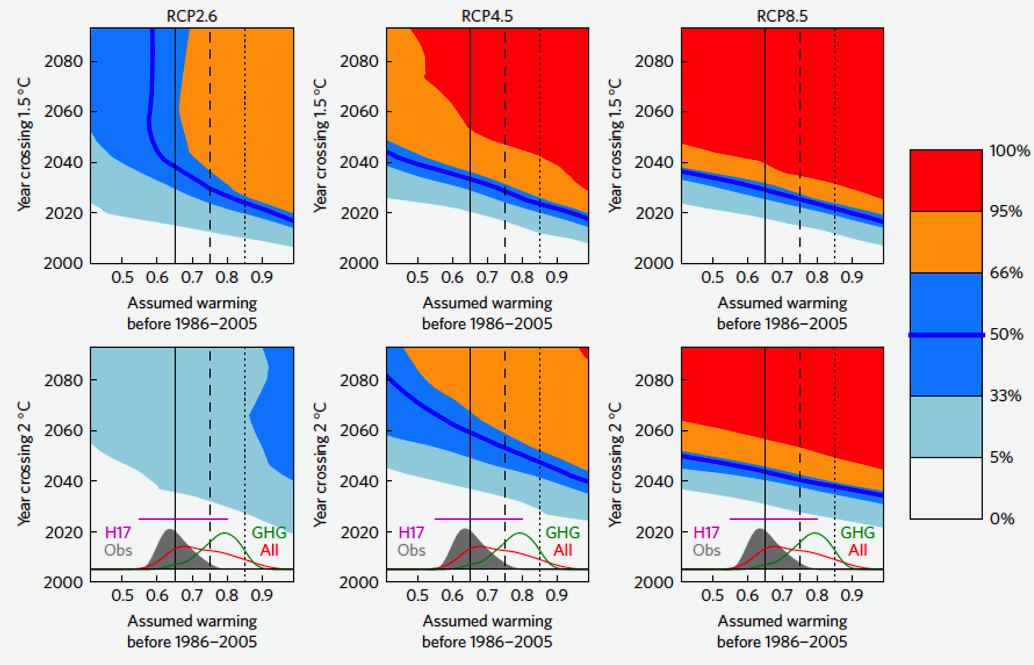 Allowable 'carbon budget' most likely overestimated
A recent article published in Nature Climate Change examines the definition of the "pre-industrial" baseline used for climate change discussions and projections. The group, including ESSC director Dr. Michael Mann, posits that the actual "pre-industrial" era is much earlier than the one used by the Intergovernmental Panel for Climate Change (IPCC). Changing the baseline could have an impact on targets used in agreements like the Paris Climate Accords.
Read more >>
Read the paper >>
The 2017 North Atlantic Hurricane Season Forecast
ESSC director Dr. Michael Mann, alumnus Dr. Michael Kozar, and researcher Sonya K. Miller have released their predictions for the 2017 North Atlantic Hurricane season. They are calling for between 11 and 20 storms with a best estimate of 15 named storms.
Read more >>
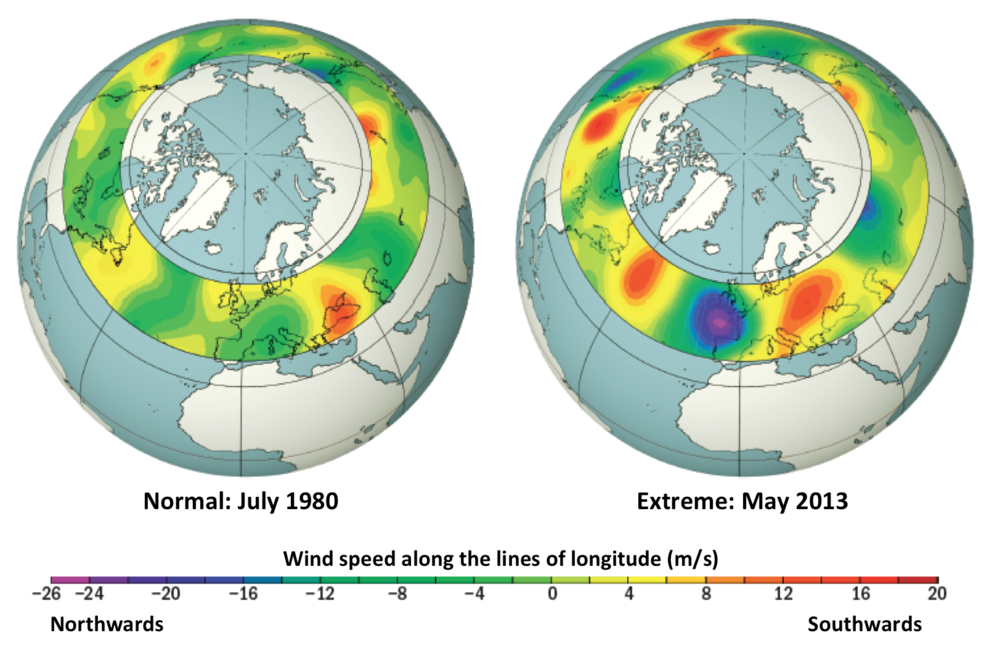 Extreme weather events linked to climate change impact on the jet stream
ESSC Director Dr. Michael Mann and others have published a study in Nature Scientific Reports looking at increasing frequency of extreme weather events and the connection to climate change through changes in the jet stream. Through a combination of observations and model output, researchers were able to identify specific events that were linked to stationary peaks in the waves of the jet stream.
Read more >>
Read the paper >>
Watch an explanation video by a co-author >>
Global climate models do not easily downscale for regional predictions
Dr. Fuqing Zhang and Dr. Michael Mann recently published a study in Advances in Atmospheric Sciences looking at the uncertainty of global model projections becomes very high as you zoom in on specific regions or locations. Climate models continue to be useful for global or large-scale projections, and further research may better inform regional or local projections.
Read more >>
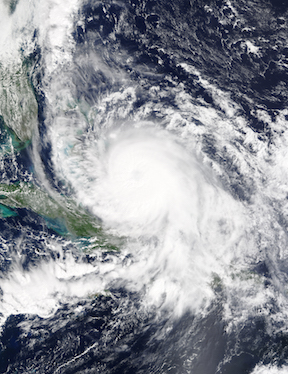 The 2016 North Atlantic Hurricane Season Forecast
ESSC director Dr. Michael E. Mann, alumnus Dr. Michael Kozar, and researcher Sonya K. MIller have released their 2016 North Atlantic Hurricane Season forecast. They are calling for a more active season.
Read more >>
 Kasting receives NAS Early Earth & Life Sciences Award
ESSC scientist Dr. James Kasting has received the 2016 National Academy of Sciences Award in Early Earth and Life Sciences. The award will be presented with the Stanley Miller Medal. Dr. Kasting is being recognized "for his outstanding modeling studies of planetary atmospheres and habitability that constrain the environmental context for the origin of life."
Read more >>
NAS website >>
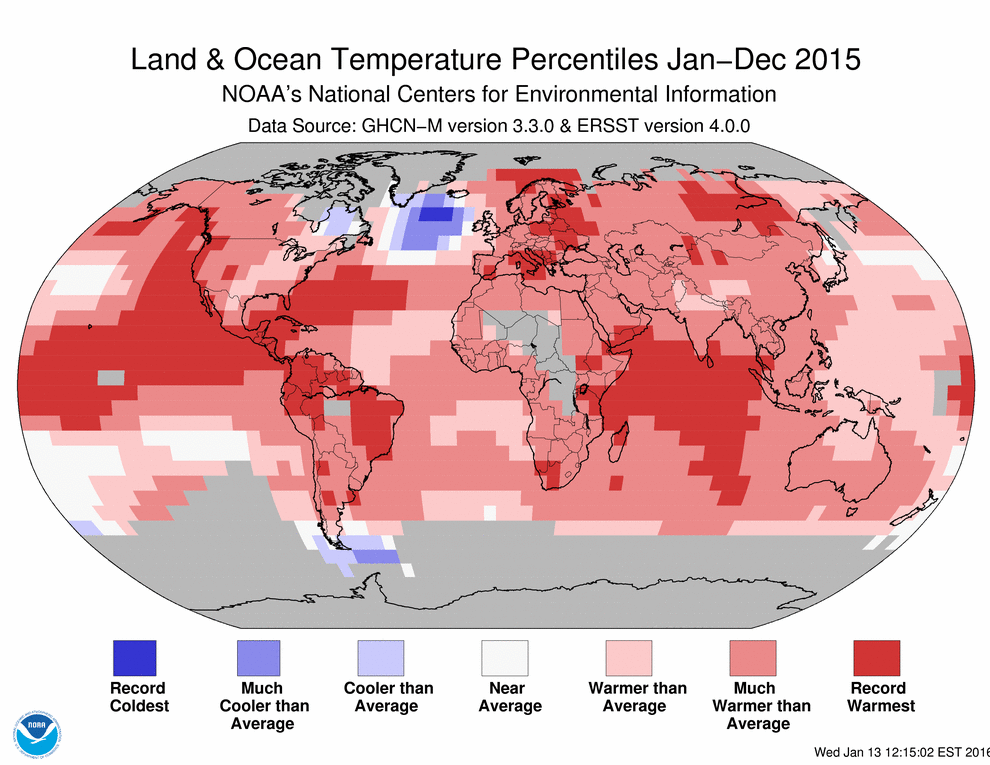 Odds are overwhelming that record heat due to climate change
ESSC director Dr. Michael E. Mann and others have recently published a study in Nature Scientific Reports showing that the recent record-breaking warm temperatures would have been extremely unlikely without human-caused climate change.
Read more >>
Storms, ozone may play pivotal role in rainforest cloud creation
Results from a recent nine-month study of the central Amazon rainforest in Brazil has shown that storm transport of ozone may be influential in the formation of clouds over the canopy and transport of moisture in the southern hemisphere. Results from the study were published in Atmospheric Environment by ESSC scientist Dr. Jose Fuentes and others.
Read more >>
Scientists: Ocean warming has doubled in recent decades
A new study in the journal Nature Climate Change reports that ocean temperatures have increased as much in the last two decades as they had in the last 150 years. ESSC scientist Dr. Chris Forest and others worked on this study.
Read more >>
 Antarctica’s next top numerical model
Penn State News profiles ESSC Scientist Dr. David Pollard. Dr. Pollard uses numerical modeling to understand the Antarctic ice sheet and the impacts of changes in the ice sheet on sea level rise over the three million years. His work was recognized earlier in 2015 with a Paul F. Robertson Award for EMS Breakthrough of the Year.
Read more >>
Climate models used to explain formation of Mars valley networks
Scientists are using climate models developed for studying Earth to look at the development of canyons and other formations on Mars. ESSC scientist Dr. James Kasting and his group are also examining the development of the current atmospheric composition.
Read more >>
NYC risks future flooding during hurricanes
ESSC graduate student Andra Reed has a new article in the Proceedings of the National Acadamies of Sciences about the impact of climate change on coastal flooding due the combined effect of storm surges from stronger hurricanes and sea level rise. ESSC director Michael Mann was a co-author on the paper.
Read more >>
 ESSC predicts relatively inactive North Atlantic Hurricane Season in 2015
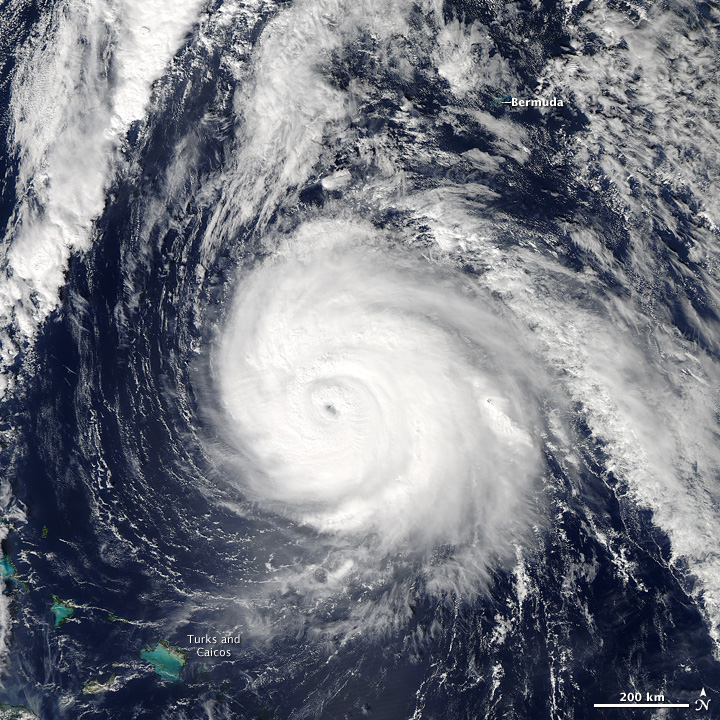
ESSC director Dr. Michael Mann, alumnus Michael Kozar, and researcher Sonya K. Miller have released the 2015 North Atlantic Hurricane Season forecast. The prediction is for 7.5 +/- 2.7 total named tropical cyclones, which corresponds to a range between 5 and 10 storms with a best estimate of 8 named storms.
Read more >>
Work begins to establish a baseline carbon budget for U.S. coastlines
ESSC scientists Dr. Ray
Najjar, Dr. Jose Fuentes, and Dr. Maria Herrmann are part of a new NASA-funded research initiative to determine whether estuaries and tidal wetlands are net emitters or absorbers of carbon dioxide.
Read more >>
Penn State professor Michael Mann leads climate change research
Penn State's The Daily Collegian profiles ESSC Director Dr. Michael Mann and his research in this article.
Read more >>
 Interaction of ocean oscillations caused 'false pause' in global warming
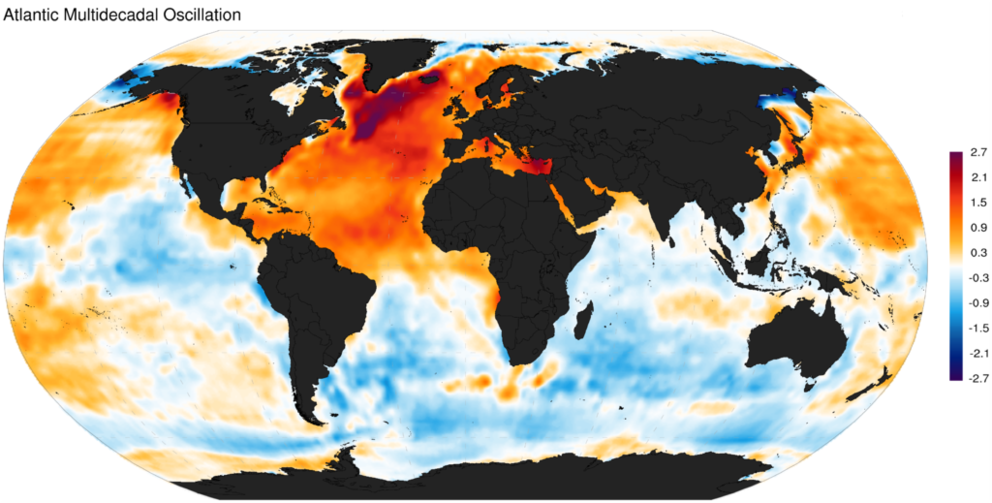
ESSC researchers Dr. Byron Steinman, Dr. Michael Mann, and Sonya K. Miller have penned a paper in Science that ascribes the recent slowdown in the overall climate warming to oscillations in the oceans, specifically a downward trend in a multi-decadal cycle in the Pacific ocean.
Read more >>
Iconic graph at center of climate debate
ESSC director Dr. Michael Mann spoke recently at the annual meeting of the American Association for the Advancement of Science about the original "hockey stick" plot and the resulting notoriety and debate.
Read more >>
Greenland plays important role in polar ice research
ESSC scientists have been working on creating computer models of the Greenland ice sheet, recognizing its importance in calculations of global sea level rise.
Read more >>
Sixteen named Distinguished Professors at Penn State
The list of 16 professors named as Distinguished Professors
includes ESSC scientist Dr. Katherine Freeman.
Read more >>
NASA awards $30M grant to Penn State to help answer climate questions
ESSC Scientist Dr. Ken Davis will lead a NASA-funded mission to measure and quanitfy carbon-related greenhouse gas sources and sinks in order to improve our ability to predict and manage climate changes. The project is named "Atmospheric Carbon and Transport-America".
Read more >>
 Alley receives BBVA Foundation Frontiers of Knowledge Award in climate change
ESSC scientist Dr. Richard Alley received the 2015 BBVA Foundation Frontiers of Knowledge Award in the category of Climate Change. Dr. Alley was recognized for his "pioneering research" into the "mechanics of ice and its implications for abrupt climate change," according to the jury citation.
Read more >>
Related: Alley family establishes graduate scholarship in climate science >>
Penn State receives NSF Critical Zone Collaboration Grant
A new National Science Foundation (NSF) grant will support and expand a network for intensive study of the Critical Zone, where ecosystems interact and affect the Earth's surface and groundwater. ESSC scientist Dr. Tim White is a leading coordinator of this effort.
Read more >>
The 2014 North Atlantic Hurricane Season: Penn State ESSC's Prediction Successful
Now that the 2014 North Atlantic hurricane season is over, ESSC scientist Michael E. Mann, alumnus Michael Kozar, and researcher Sonya Miller are assessing their successful total named storm prediction made in May 2014.
Read more >>
Interdisciplinary team aims to predict the future of Antarctic ice
An interdisciplinary team feature scientists and statisticians from several departments, including ESSC scientist Dr. Chris Forest, has been awarded a grant to develop new statistical techniques to learn more about the evolution of the Antarctic ice sheet over the past 2,000 years.
Read more >>
NASA funds study of changing climate, land use on Chesapeake and Delaware Bays
ESSC Scientist Dr. Ray Najjar is involved in a NASA-funded project to look at the impact of climate change, land use change, and fertilizers on the Chesapeake and Delaware Bays. The three-year interdisciplinary project will combine satellite data and computer models to study the water quality and changes in the two estuaries.
Read more >>
Fine-scale climate model projections predict malaria at local levels
Research by ESSC director Dr. Michael Mann and others has shown that downscaling of climate model projections can inform malaria risk at finer scales than the original model resolutions. This work was done in collaboration with others in entymology and international health research.
Read more >>
PDF of the paper >>
ESSC Scientists make 2014 North Atlantic Hurricane Season forecast
ESSC scientist Michael E. Mann, alumnus Michael Kozar, and researcher Sonya Miller have released their seasonal prediction for the 2014 North Atlantic hurricane season, which officially starts on June 1st and runs through November 30th. The prediction is for 9.3 +/- 3.0 total named tropical cyclones, which corresponds to a range between 6 and 12 storms with a best estimate of 9 named storms.
Read more >>
Slowdown of Global Warming Fleeting
ESSC director Dr. Michael Mann, together with ESSC researchers Dr. Byron A. Steinman and Sonya K. Miller, have a new study about the causes of the recent slowdown in the warming rate of mean surface temperatures. In the study, the Atlantic Multidecadal Oscillation (AMO) is playing a partial role in offsetting ongoing warming.
Read press release >>
More information on the article >>
Earth Will Cross the Climate Danger Threshold by 2036
ESSC director Dr. Michael Mann penned this article in April 2014's Scientific American about projections of climate change using an Energy Balance Model.
Read more >>
Supplemental Information >>
Alley to receive National Academy of Sciences award
ESSC scientist Dr. Richard Alley received the National Academy of Sciences Arthur L. Day Prize and Lectureship for his lasting contributions to science with his groundbreaking research on ice sheets in Antarctica and Greenland.
Read more >>
 ESSC Scientists make prediction for 2013 North Atlantic Hurricane Season
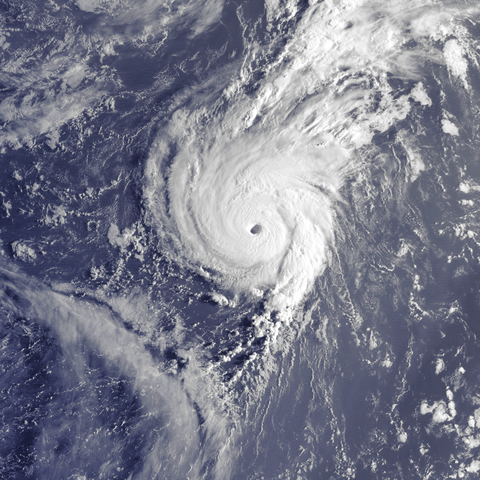
ESSC scientist Michael E. Mann, alumnus Michael Kozar, and researcher Sonya Miller have released their seasonal prediction for the 2013 North Atlantic hurricane season, which officially starts on June 1st and runs through November 30th. The prediction is for 16.0 +/- 4.0 total named tropical cyclones, which corresponds to a range between 12 and 20 storms with a best estimate of 16 named storms.
Read more >>
Summer 2013 research assistantships are available in the area of climate science within the Department of Meteorology at Penn State University (University Park Campus). Appointment is for ten weeks, starting 3 June 2013.
New approach alters malaria maps
A recently published study in Nature Scientific Reports says that the risk of malarial infection is more closely linked to daily temperature variation than average monthly temperature. Mean temperatures had a tendency to overestimate or underestimate infection risk under certain climate conditions. Dr. Michael Mann is a co-author on this study.
Read more >>
More information including article PDF >>
Researchers to investigate Everglades ecosystem, climate change
ESSC Scientists Dr. Jose Fuentes and Dr. Michael Mann have been awarded a grant to examine the impacts of climate change water management effort in the Florida Everglades.
Read more >>
 Ozone depletion trumps greenhouse gas increase in jet-stream shift
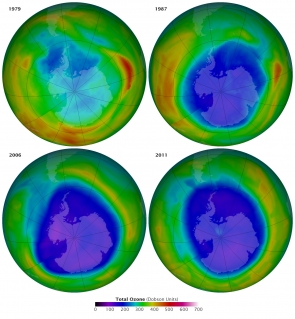
ESSC scientists Dr. Sukyoung Lee and Dr. Steven Feldstein have published a study in the journal Science that shows that ozone depletion and increases in greenhouse gas emissions have contributed to a southward shift of the jet stream in the Southern Hemisphere. This shift could have a significant impact on circuation and precipitation patterns.
Read more >>
Read summary from the New York Times >>
Professor leads team to Pine Island Glacier in the Antarctic
ESSC scientist Dr. Sridhar Anandakrishnan is leading a research team to Pine Island Glacier in Antarctica to study interactions between the glacier, ocean, and ice shelf, especially under warming conditions. His team is attempting to map the glacier and shelf and determine both how thick the ice is and how deep the water underneath the shelf is.
Read more >>
Read another update >>
Mann named distinguished professor in EMS
Earth and Mineral Sciences Dean William Easterling announced that Dr. Michael Mann has been named a Distinguished Professor in Meteorology for accomplishments and leadership in climate change research.
Read more >>
Fluctuating environment may have driven human evolution
Researchers examining the environment in East Africa 2 million years ago have hypothesized that a highly variable climate may have significantly contributed to human evolution during that period. ESSC researchers Dr. Kate Freeman and Clayton Magill contributed to the study.
Read more >>
Video: Jenni Evans discusses predicting hurricane tracking
ESSC scientist Dr. Jenni Evans recently discussed predictions of hurricane tracks and strength during a session of "Research Unplugged."
Read more >>
Watch excerpt >>
Antarctic ice sheet quakes shed light on ice movement and earthquakes
A new study looking at seismic activity on the David Glacier in Antarctica is shedding light on seismic activity in other parts of the world. ESSC scientists Dr. Richard Alley and Dr. Sridhar Anandakrishnan comment on the research.
Read more >>
Multiple proxy datasets can clarify ancient climate regimes
Penn State postdoctoral researcher Dr. Byron Steinman has released a paper on his research looking at the historical record of drought in arid and semi-arid regions of the western United States. He examined both tree-ring records and oxygen isotopes as proxies for past precipitation and temperatures. Dr. Michael Mann was a collaborator and co-author.
Read Penn State Live press release >>
Read Univerity of Pittsburgh press release >>
Read more from the Oregonian >>
Read more from E&E News/ClimateWire >>
Read the journal article [PDF] >>
Alley named to U.S. News STEM Leadership Hall of Fame
Dr. Richard Alley was recently named one of the inaugural receipients of the STEM (Science, Technology, Engineering, and Mathematics) Leadership Hall of Fame by U.S. News and World Reports.
Read more >>
Faces of Penn State: Dr. Richard Alley
Dr. Richard Alley was profiled in this edition of "Faces of Penn State."
Read more >>
Penn State faculty members awarded Evan Pugh Professorships
ESSC Scientist Dr. James Kasting was among three Penn State faculty members awarded an Evan Pugh Professorship, the highest honor the university bestows on its faculty. Dr. Kasting was recognized for his research into the evolution of early Earth and other planets.
Read more >>
 Tree rings may underestimate climate response to volcanic eruptions
A new study by Dr. Michael Mann and his colleagues posits that tree rings, often used as a proxy for temperature changes, may not capture intense short-term changes like cooling due to large volcanic eruptions. This study, published in Nature Geoscience, compares temperature reconstructions from tree-ring data to climate models driven by past volcanic eruptions.
Read more >>
More information about this study >>
Read news summary from the Summit County Citizen's Voice >>
Image Credit: National Parks Service
Climate scientists not cowed by relentless climate change deniers
Physics Today discusses the coordinated effort to undermine climate science by attacking and intimidated climate scientists. Dr. Michael Mann comments on the attacks which he discusses in his new book The Hockey Stick and the Climate Wars.
Read more (subscription may be required) >>
Volcanic eruptions emerge as lead cause for Little Ice Age
New research into the onset and timing of the Little Ice Ago posits that a series of volcanic eruptions in the tropics helped trigger the climatic shift. Dr. Michael Mann comments on the study.
Read more>>
Richard Alley on Challenges, Choices and Climate Change
This article from Forbes profiles ESSC scientist Dr. Richard Alley and gets his thoughts on the current state of the climate and ways we can and should combat climate change.
Read more >>
Richard Alley to speak on climate change
ESSC scientist Dr. Richard Alley will be speaking at the School of International Affairs (SIA) about climate change on January 19, 2012. This talk is part of the SIA's Colloquium on Global Issues. The talk will be at 11:15am in 116 Lewis Katz building on Penn State's main campus.
Read more >>
Michael Mann touts skeptics, targets "deniers"
The C-Ville Weekly covers the recent keynote speech given by Dr. Michael Mann at Enviroday 2012 at the University of Virginia. Mann discussed his upcoming book and the influence of media on the public's perception of science and scientists.
Read more>>
Mann, Pollard elected Fellow of American Geophysical Union
Dr. Michael Mann and Dr. David Pollard are among the scientists in 2012 class of elected Fellows of the American Geophysical Union (AGU). They are both being recognized for their groundbreaking research into climate change.
Read more >>
Scientist says greenhouse gases causing global warming
The News & Advance (Lynchburg, VA) covered the lastest lecture by Michael Mann on climate change and the need for urgent action to combat emissions.
Read more>>
Climate balancing: Sea-level rise vs. surface temperature change rates
Recent research suggests geoengineering approaches which seek to reduce incoming solar energy as a way to combat rising greenhouse gas levels are an imperfect solution to the challenges of climate change. This research suggest that strategies for combating climate change need to balance the problems of sea-level rise as well as surface temperature changes. ESSC scientists Dr. Klaus Keller and Dr. Ryan Sriver participated in the research and comment on the findings.
Read more >>
Michael Mann: The climate scientist who the deniers have in their sights
Dr. Michael Mann is profiled in this article from the Independent (UK). The article discusses the attacks against Mann's work since the publication of the first of his"hockey stick" journal articles in 1998.
Read more >>
Wild weather hits Latin America
CBS News covers the recent spate of extreme weather in Latin America. Dr. Michael Mann comments on the role of climate change in weather events.
Read more >>
Rise of atmospheric oxygen more complicated than previously thought
Rock cores from the 2007 Fennoscandia Arctic Russia - Drilling Early Earth Project (FAR DEEP) campaign suggest that the emergence of oxygen in Earth's atmosphere most likely occurred over a series of events rather than one singular event. This research was undertaken by a group headed by ESSC scientists Dr. Lee Kump and Dr. Michael Arthur.
Read more >>
What do U.S. students know about climate change?
In this article in the American Geophysical Union's EOS, Dr. Kevin Theissen discusses the state of climate change communication in undergraduate education. He acknowledges the roles of books such as Dr. Michael Mann and Dr. Lee Kump's Dire Predictions in increasing climate science literacy.
Read more >> (subscription may be required)
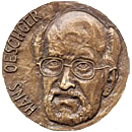 Mann to recieve Hans Oeschger Medal from European Geosciences Union
ESSC Director Dr. Michael Mann has been awarded the 2012 Han Oeschger Medal from the European Geosciences Union (EGU). This medal recognizes his accomplishments within the field of climate science. This prestigious award was established in 2001 to honor outstanding scientists whose work is related to past, present, and future climates.
Read more >>
Sticking to Climate Science
ESSC Director Dr. Michael Mann responds to Scientific American's recent interview of Dr. Richard Muller.
Read more >>
Alley to receive Heinz award
ESSC Scientist Dr. Richard Alley will receive a Heinz Award for his work in climate and polar ice studies as well as outreach through program like "Earth: The Operators' Manual." The Heinz Awards, given by the Heinz Family Foundation, recognizes those who have made a significant contribution benefitting the environment.
Read more>>
A discernable human influence: Schneider and climate change
Miller-McCune covers the impact of Dr. Stephen Schneider on climate science and communication following a memorial symposium in late August. ESSC director Dr. Michael Mann comments on the support and vision that Schneider provided for the community.
Read more>>
Federal auditors find no evidence to support 'Climategate' accusations
The National Science Foundation (NSF) has ended its investigation of ESSC Director Dr. Michael Mann after declaring, "No direct evidence has been presented that indicates [he] fabricated the raw data he used for his research or falsified his results." This is the latest organization to declare the climate-change research to be valid.
Read Grist article >>
Read article from Penn State's Daily Collegian >>
Read NSF report [PDF] >>
Climate-change science makes for hot politics
ESSC scientist Dr. Richard Alley lays out some basic facts and physics in this Washington Post article about the politicization of climate-change science among front-runners for the Republical presidential nomination.
Read more >>
Record-breaking heat might be here to stay
July was a record-breaking month for many areas of the United States, including a record-hot July in Wilmington, DE. Dr. Michael Mann comments in this Delaware News Journal story that this sultry pattern may become more frequent with greenhouse gas-induced climate change.
Read more >>
The Capital Green Scene interview: Dr. Michael Mann
WVCR's Capital Green Scene interviewed Dr. Michael Mann about the "hockey stick" graph and the rest of his research on climate change. He also discusses the attacks on climate change research and researchers over the last several years.
Listen to the interview>>
Sulphur from Chinese power stations 'masking' climate change
A recent scientific paper in Proceedings of the National Academies of Science argues that increasing sulfur emissions from power plants in China have led to a flattening of the global surface temperature curve over 1998-2008. Dr. Michael Mann comments on the study in these two reports.
Read Science News article >>
Read Guardian article >>
Climate-change politics: The sceptic meets his match
This article from Nature News highlights the systematic attacks of the Heartland Institute and its leader Joe Bast on the science of climate change. Despite efforts to cherry-pick contrarian results to cast doubt on the credibility and consensus of the science, more scientists (85% in 2008) agree that human activity plays a role in climate change. ESSC director Dr. Michael Mann comments.
Read more>>
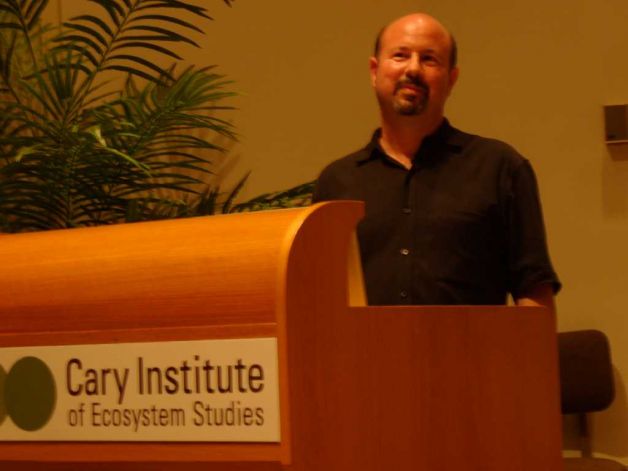 The front line of climate wars
ESSC director Dr. Michael Mann recently gave a lecture at the Cary Institute of Ecosystem Studies in Millbrook, NY. His talk focused on the reality of climate change and the continuing research on quantifying impacts. He also addressed the attacks he has endured as a result of his work on climate change.
Read Albany Times-Union article >>
Read Millbrook Independent article >>
Photo courtesy the Albany Times-Union.
Tracking, predicting, and planning for sea-level rise
ESSC Scientist Dr. Raymond Najjar was interviewed for a WHYY's Radio Times program on rising sea levels and impacts. He answered questions based on his research into climate change scenarios, sea-level rise, and impacts on estuaries.
Listen to the show >>
Experts warn epic weather ravaging US could worsen
AFP writes about this year's extreme weather and the likelihood of extremes under the current climate change scenario. Dr. Michael Mann offers his insight on the effects of warming on extreme events.
Read more >>
Salt marsh sediments help gauge climate-change-induced sea level rise
Scientists, including ESSC director Dr. Michael Mann, have recently released a new 2,000 year record of changes in sea level. This new record, derived from salt water sediment cores taken from the salt water marshes of North Carolina, should provide further insight into past and future climate change.
Read more >>
Read the article and access the supplementary information >>
Read the National Science Foundation press release >>
 Penn State expert determined to find life on Earth-like planets
This profile of ESSC Scientist Dr. James Kasting details his latest work in applying knowledge gained about early Earth to identifying other Earth-like planets capable of supporting life. He has written a book to explain some of this research. The book, called "How to Find a Habitable Planet," can be found here.
Read more >>
Photo Courtesy Penn State Public Relations
Carbon release to atmosphere 10 times faster than in the past
Graduate student Ying Cui, ESSC Scientist Dr. Lee Kump, and their colleagues have published a new study in Nature Geoscience that estimates that the current rate of carbon release to the atmosphere is 10 times greater than during the Paleocene-Eocene Thermal Maximum (PETM, 55.9 million years ago). The PETM is often regarded as an analog for current and future changes in climate, but the faster release of carbon in the modern era could mean that ecosystems may not be able to adapt to changes.
Read more >>
Read Journal article (subscription required) >>
 ESSC Scientist Richard Alley to host new PBS program
Starting April 10, 2011, PBS will feature ESSC scientist Dr. Richard Alley in a new program "Earth: the Operator's Manual." Alley will be hosting and has written a companion book to the series.
Read more >>
Image Courtesy ETOM website
 EESI Environmental Scholar Keeps His Eye on Hurricanes
EESI Environmental Scholar Michael Kozar and his graduate research are profiled in this article. Kozar is enrolled in the Integrated Undergraduate-Graduate program within the department of Meteorology. He is presently working with ESSC director Dr. Michael Mann and MIT scientist Dr. Kerry Emanuel on a master's thesis dealing with Atlanic tropical cyclones over the past millenium.
Read more>>
DOE grant joins climate modeling with local, regional empirical data
A new Department of Energy (DOE) grant will bring together resources of observational climate data and climate model developers in the hopes of improving climate models and projections. Several Penn State scientists and students will be involved with the project, including ESSC researchers Dr. Klaus Keller and Dr. Chris Forest.
Read more>>
Faculty receive WUN support for global research partnerships
Four Penn State faculty members, including ESSC Scientist Dr. Lee Kump, have been selected to receive funding from the Worldwide Universities Network (WUN) Research Development Fund. Dr. Kump will run an ocean acidification workshop in conjunction with researchers from other universities.
Read more>>
ESSC Director elected to AAAS Office
ESSC Director Dr. Michael Mann has recently been elected to a 4-year term as Member-at-Large of the Atmospheric and Hydrospheric Sciences Section of American Association for the Advancement of Science (AAAS).
Read announcement>>
 Keller uses Earth system analysis to improve climate decisions
In this profile from the Earth and Environmental Systems Institute (EESI), ESSC scientist Dr. Klaus Keller discusses his research into climate change decision making. Through his Center for Climate Risk Management (CLIMA), Keller balances climate science, ethics, and economics into a risk management strategy.
Read more>>
Could climate change have led to the fall of Rome?
ESSC director Dr. Michael Mann recently appeared on NPR's All Things Considered to discuss a recent Science article. The article, written by a team of Swiss scientists, used tree-ring data to show that the end of the Roman Empire coincided with a period of changes in the climate system. Dr. Mann comments on the study and how scientists are able to reconstruct past climates using tree-ring data.
Read more and listen to the interview>>
Dr. Michael Mann appears on CBC with George Stroumboulopoulos
Dr. Michael Mann recently appeared on CBC's George Stroumboulopoulos Tonight in a piece about climate change and
polar bears. Dr. Mann spent 5 days in Churchill in mid-November 2010 working
with Polar Bears International.
Watch Now >>
Polar Bears, Climate Change, and How Each of Us Can Help
ESSC director Dr. Michael Mann recently appeared in this webcast for Polar Bears International (starts at 0:38). Panelists are Dr. Steven C. Amstrup, Dr. Michael Mann, Raine Maida, Chantal Kreviazuk, and George Stroumboulopoulos.
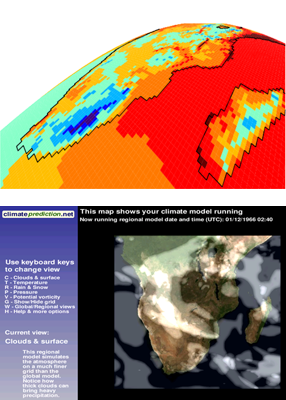 Penn State provides processing power for new international "weather-at-home" experiment
A new project by the U.K. Met Office and the website climateprediction.net kicks off this week. The program is expanding on the existing "Weather@home" project where anyone with a computer and internet access can contribute to climate research. ESSC scientist Dr. Chris Forest has set up one server at Penn State with another on the way to help store and process the data generated.
Read more >>
Dr. Michael E. Mann: Get the anti-science bent out of politics
ESSC Director Dr. Michael Mann's recent op-ed in the Washington Post remarks on the scientific implications from recent attacks on climate science by politicians.
Read more >>
NSF Awards Major Climate Change Education Grant to Consortium
The National Science Foundation has awarded a Climate Change Education grant to a consortium of zoos, universities, and other institutions. This group, led by the Chicago Zoological Society, includes the Earth System Science Center.
Read more >>
Forest selected as a lead author for IPCC Fifth Assessment Report
ESSC scientist Dr. Chris Forest has been selected to be one of the lead authors in the Fifth Assessment Report of the Intergovernmental Panel on Climate Change (IPCC). He will be working on Chapter 9 of Working Group I: "Evaluation of Climate Models." Dr. Richard Alley, another ESSC scientist, will be working as a review author of Chapter 13 in Working Group I: "Sea Level Change."
Read more >>
Wildlife study says summer heat waves to rise locally
Ed Perry of the National Wildlife Federation appeared with ESSC director Dr. Michael Mann and others to present the latest update to the Federation's regional outlook titled, "More Extreme Heat Waves: Global Warming’s Wake Up Call."
Read more >>
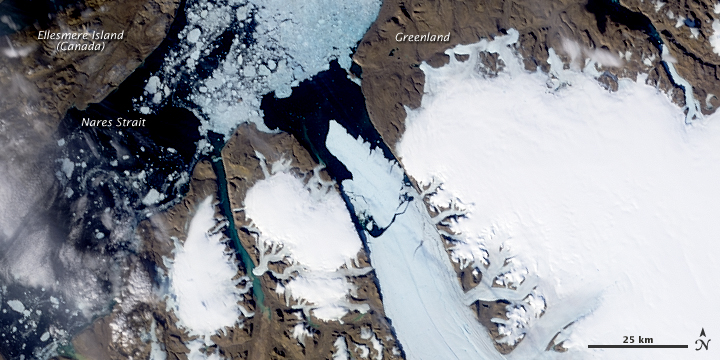 Greenland ice sheet faces 'tipping point in 10 years'
The Guardian reports on testimony before Congress by ESSC scientist Dr. Richard Alley and other notable scientists. Alley noted that a rise in temperature between 2C and 7C could result in the loss of Greenland's ice sheet and a notable rise in sea level.
Read more >>
Image Credit: NASA/Earth Observatory
Interviews with ESSC Director Michael E. Mann
Dr. Michael Mann gave several interviews recently about the final findings of two lengthy investigations into his conduct and that of his colleagues. Both recent reports revealed that nothing improper was done by either Mann or his colleagues.
Listen to the BBC News interview >>
Watch the Clean Skies interview >>
Watch the CNN interview >>
Watch the Climate Science Watch interview >>
ESSC Director responds to RA-10 Investigation findings
Penn State's RA-10 Investigation into Dr. Michael E. Mann has concluded. He responds, "I am pleased that the last phase of Penn State's investigation has now been concluded, and that it has cleared me of any wrongdoing. These latest findings should finally put to rest the baseless allegations against me and my research." Mann was also cleared by the investigation by an independent British panel.
Read entire statement >>
Read RA-10 Final Report >>
Read The Daily Collegian article about the Muir Russell report >>
Read the editorial in The New York Times >>
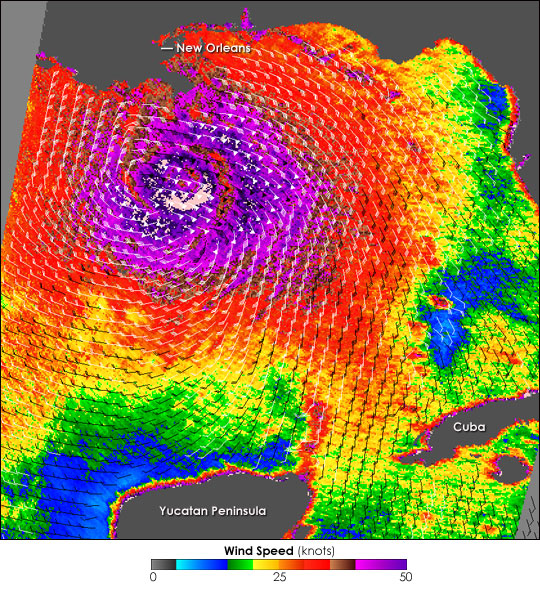 Mann and Kozar release 2010 Atlantic hurricane season prediction
ESSC director Dr. Michael Mann and graduate student Michael Kozar have recently released their prediction for the 2010 Atlantic hurricane season, which runs from 1 June to 30 November. Mann and Kozar predict an extremely active season due to warmer than average sea surface temperatures in the tropical Atlantic Ocean and projections of near-neutral or slightly cool ENSO conditions.
Read more >>
Image Credit NASA/VisibleEarth
Climate Scientists Claim 'McCarthy-Like Threats,' Say They Face Intimidation, Ominous E-Mails
ABC News correspondent Dan Harris reports on e-mail and other threats that climate scientists have received recently at the hands of those looking to chill the discourse on climate change. ESSC director Dr. Michael Mann is interviewed for the story.
Read more>>
News, reviews, and more information about Dire Predictions by Michael Mann and Lee Kump
Reactions to the 2007 IPCC Report
News Archive: